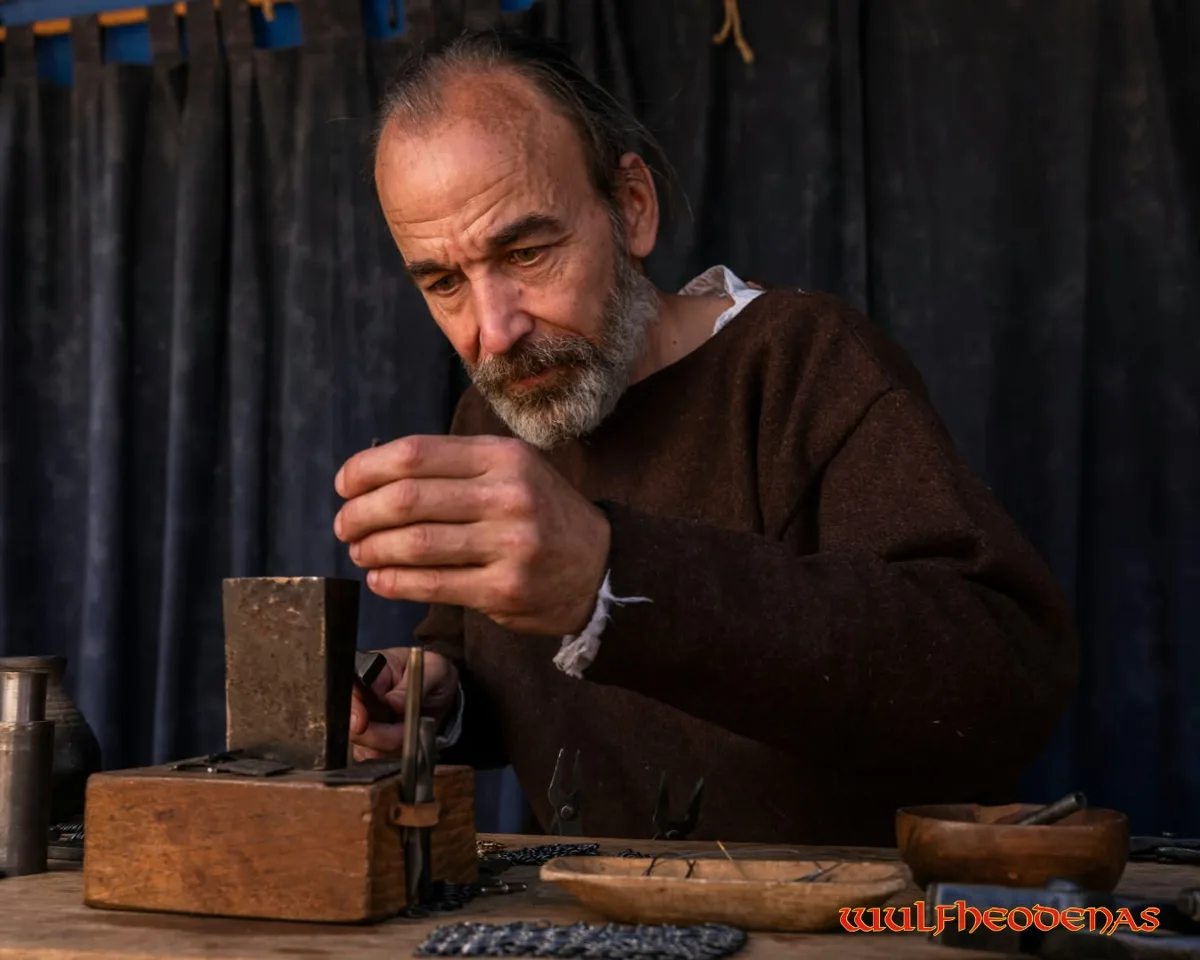
On Peter Cummings’s desk there is a small clear glass cabochon with a flower pressed into the back. He dug it up in the nineteen-eighties, in the garden of a miners’ cottage north of Bendigo, where he was digging for exercise and to fill the time: he was in his early thirties and burnt out from a career in social welfare that had been, he has written, his identity and his meaning in life. The flower held him more than the object did, and he went to the libraries, many of them, because there was no internet yet. His search into the craft began with it.
Copper wheel glass engraving is on the British Red List of endangered crafts as critically endangered, with no trainees recorded. The register notes that the lathes are no longer made in Germany, that the Czech ones are expensive, and that a basic lathe and a set of wheels cost eight to ten thousand pounds to put together. Cummings lives in Sale, in Gippsland, Victoria.
The pencil and the paper
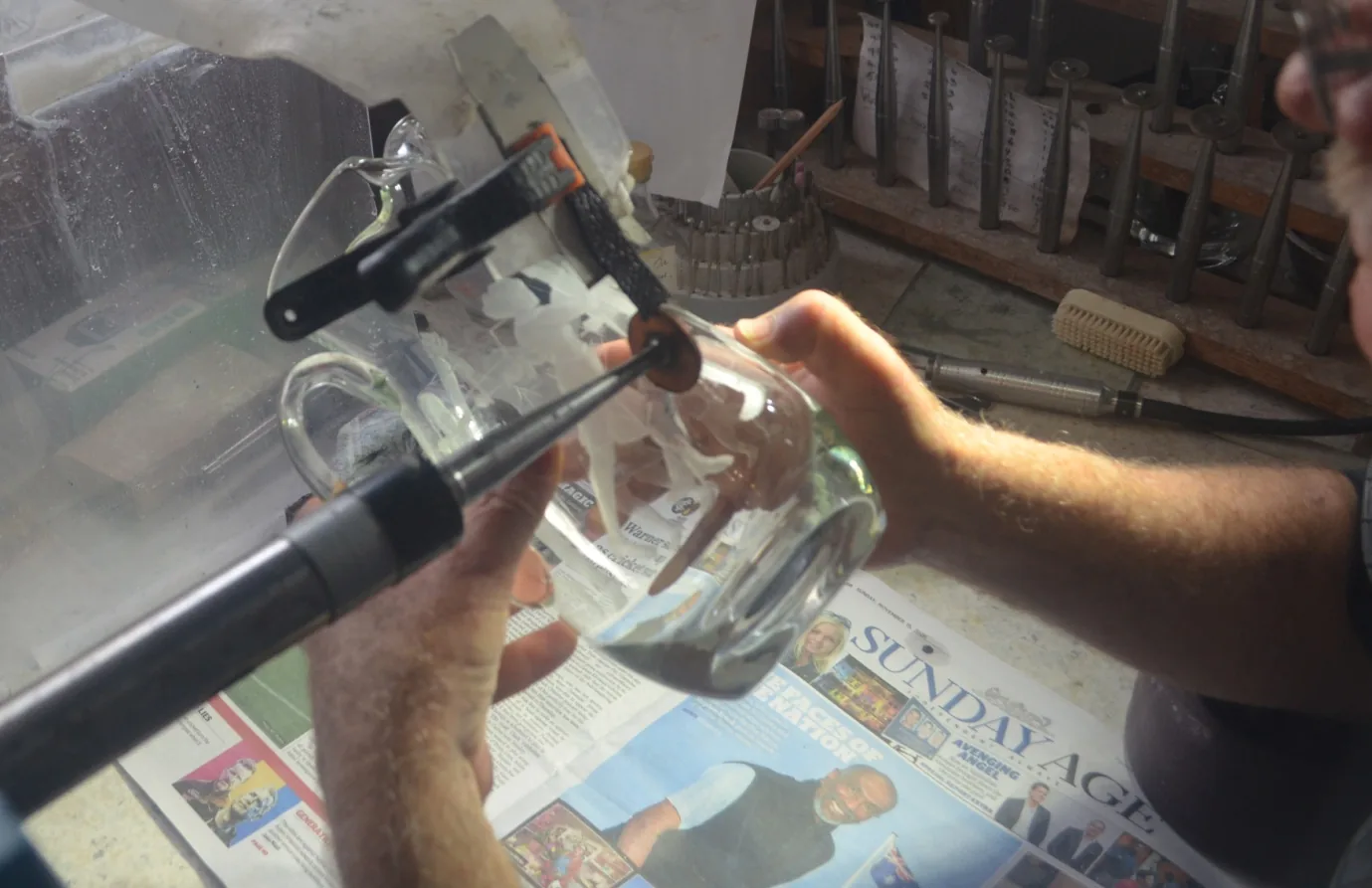
He began with a small rotary drill and a diamond burr, on every drinking glass and jug the charity shops could supply, and bought new glass once he started selling at markets. The books came next: Boyd Graham’s beginner’s guide, and then, from a chance visit to a bookshop, Peter Dreiser and Jonathan Matcham’s The Techniques of Glass Engraving, which he calls the bible of the craft. It is built around a lathe with copper wheels, and intaglio engraving became his world. What he could not get was the sight of a lathe running. He was turned down for a workshop overseas and not invited to the ones with visiting experts; he asked to visit a well-equipped institution and was passed along, though one teacher did tell him that the safest machine to buy was the Merker MK1. Around 2012, past sixty, out of a job in Melbourne and with a mortgage that was not going away, he moved to Sale, where a studio could be had, and bought one, a German portable lathe. He drove to the freight depot at Tullamarine to collect it, he has written, in a trance.
A very large investment, the Merker lathe and my set of diamond wheels cost the equivalent of buying a small car. My equipment and materials have been paid for by working basic labour jobs, with only a short period of regular sales. I am not an aggressive marketer.
Peter CummingsFor years before that the tool had been a flex-shaft drill, which moves over the glass like a pencil.
A lathe means the piece is held and moved around under the rotating wheels, as if moving the paper under a pencil. Two hands on the glass make it more stable, especially for fine detail.
Peter CummingsEight engineers
The lathe he wanted next was one he had seen in a photograph. During the pandemic Greg Sullivan, a copper wheel engraver in Waterford, and the engineers who had built him an affordable beginner’s lathe posted a picture of it, and nothing was flying into Australia. Cummings took the specifications to engineers near him. By September 2022, in a piece he wrote for the craft magazine Garland, he was still waiting: there had been a serious illness, machines had broken down, parts could not be imported and there were not the people to do the work.
Looking back I don’t know why I thought I could get local engineers to make one for me. After eight engineers, electricians, and lots of help and encouragement from the CopperWheelEngravers group it is working well. It is a bit longer in the shaft, and the motor is stronger so I have done some bigger works more comfortably. But it just feels like it’s mine.
Peter Cummings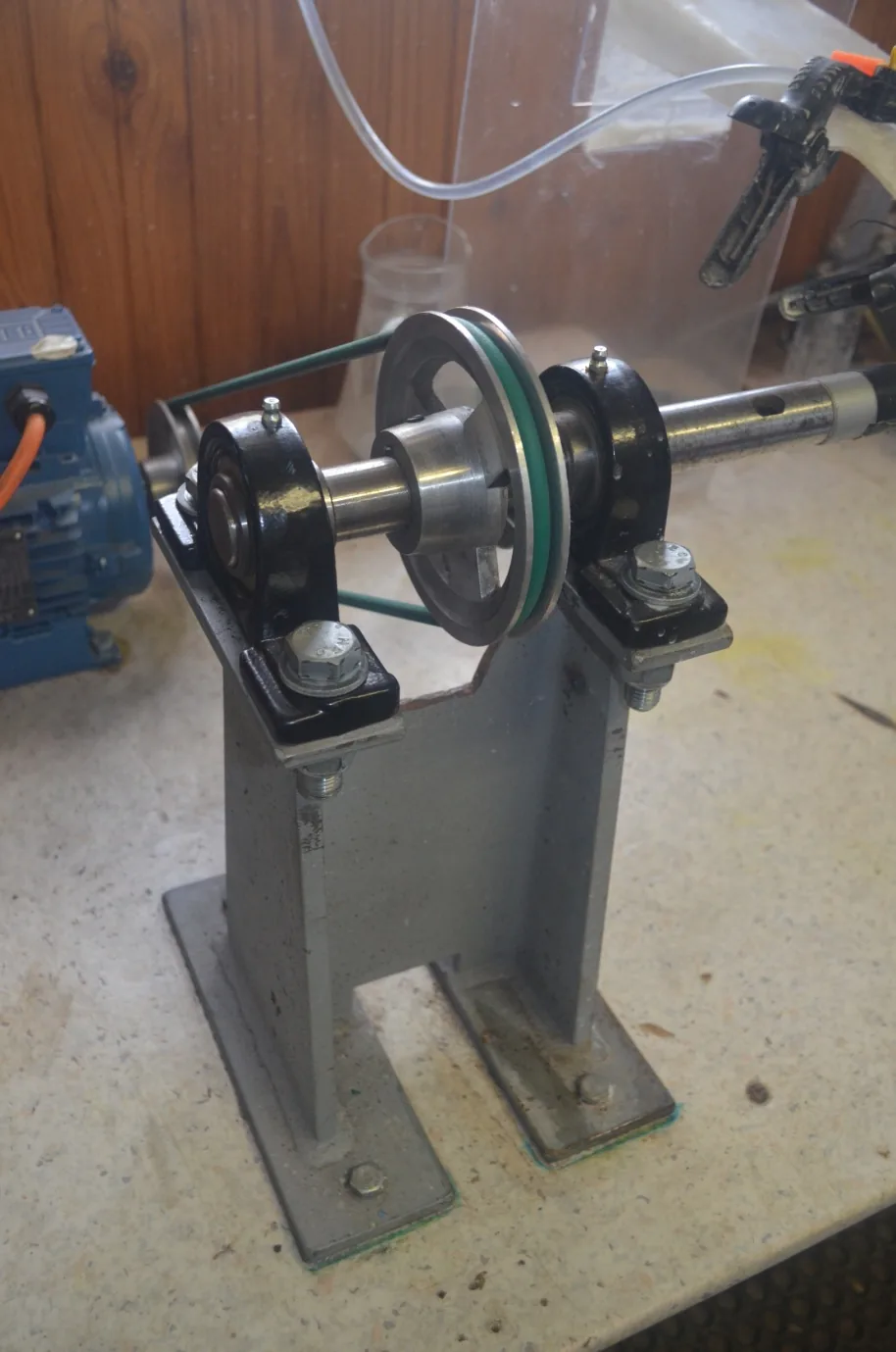
The stand is a cut-down H-beam with ten-millimetre steel plate top and bottom, and the shaft is machine steel, fifty millimetres longer than the Merker’s. The pulleys were machined to a tight bore rather than the usual loose fit under a grub screw, which pulls the pulley slightly to one side and sets up a vibration you can find by holding a pencil softly against the edge of the wheel as it runs. A gap is left in the paint on the inner pulley so that a digital tachometer can read the speed.
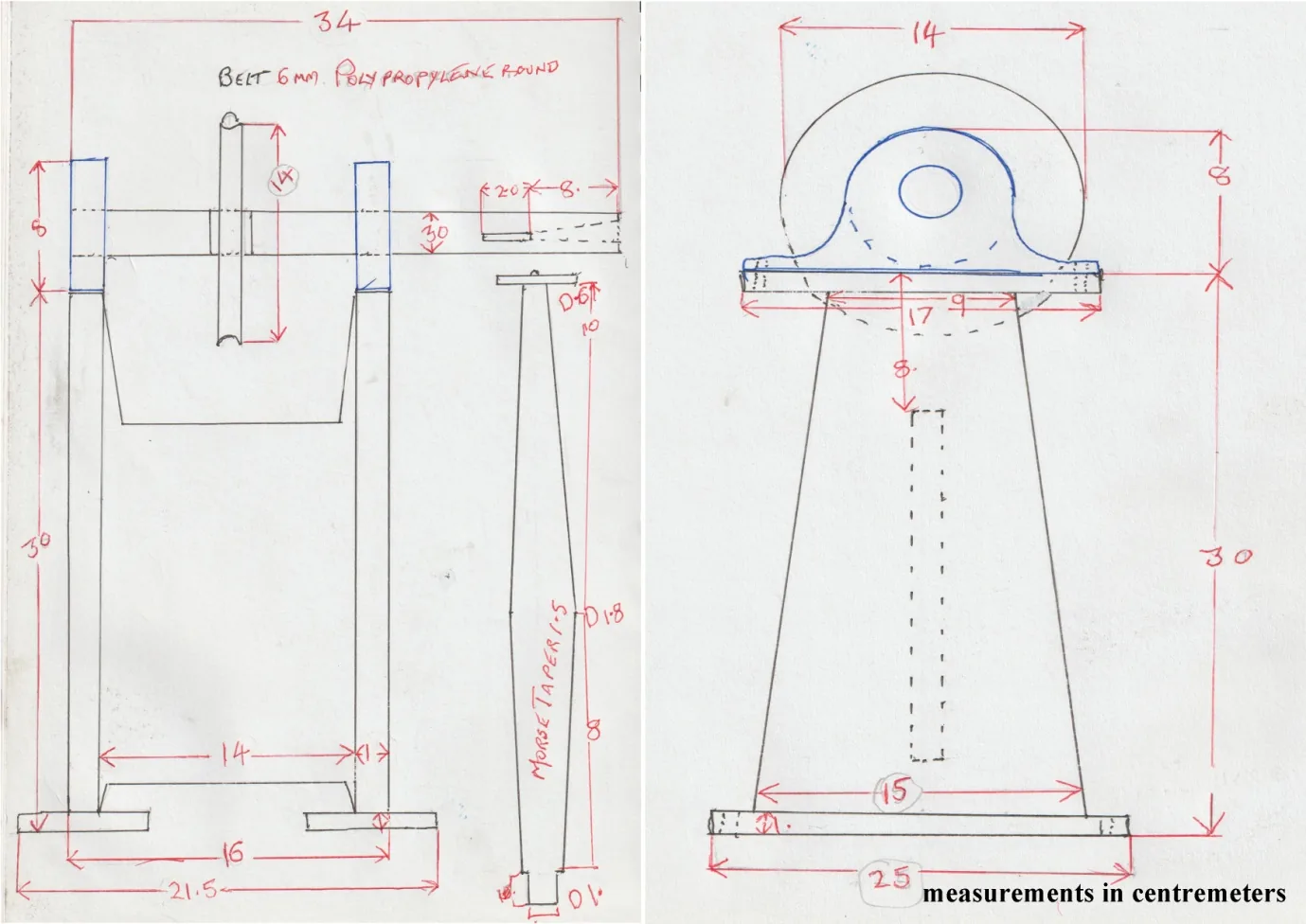
I am trying to get more glass engraving done in Australia, with no luck so far. Maybe putting details out there, someone will find an engineer and go for it.
Peter CummingsAnyone may come to Sale and try it.
A length of pipe
While the engineers were working he made the wheels. He had a length of copper pipe someone had given him, twenty centimetres long and five across, and a local engineer turned spindles to match the Merker’s, so that fitting the new wheels would not damage the bearings of either machine.
I hammered flat some copper I had, cut circles, rounded them, drilled then squared the holes. Filed square the ends of the shafts to make a reasonably tight fit. Stood upright to solder them on. It took a few tries with the rounding being slow, but it works fine.
Peter Cummings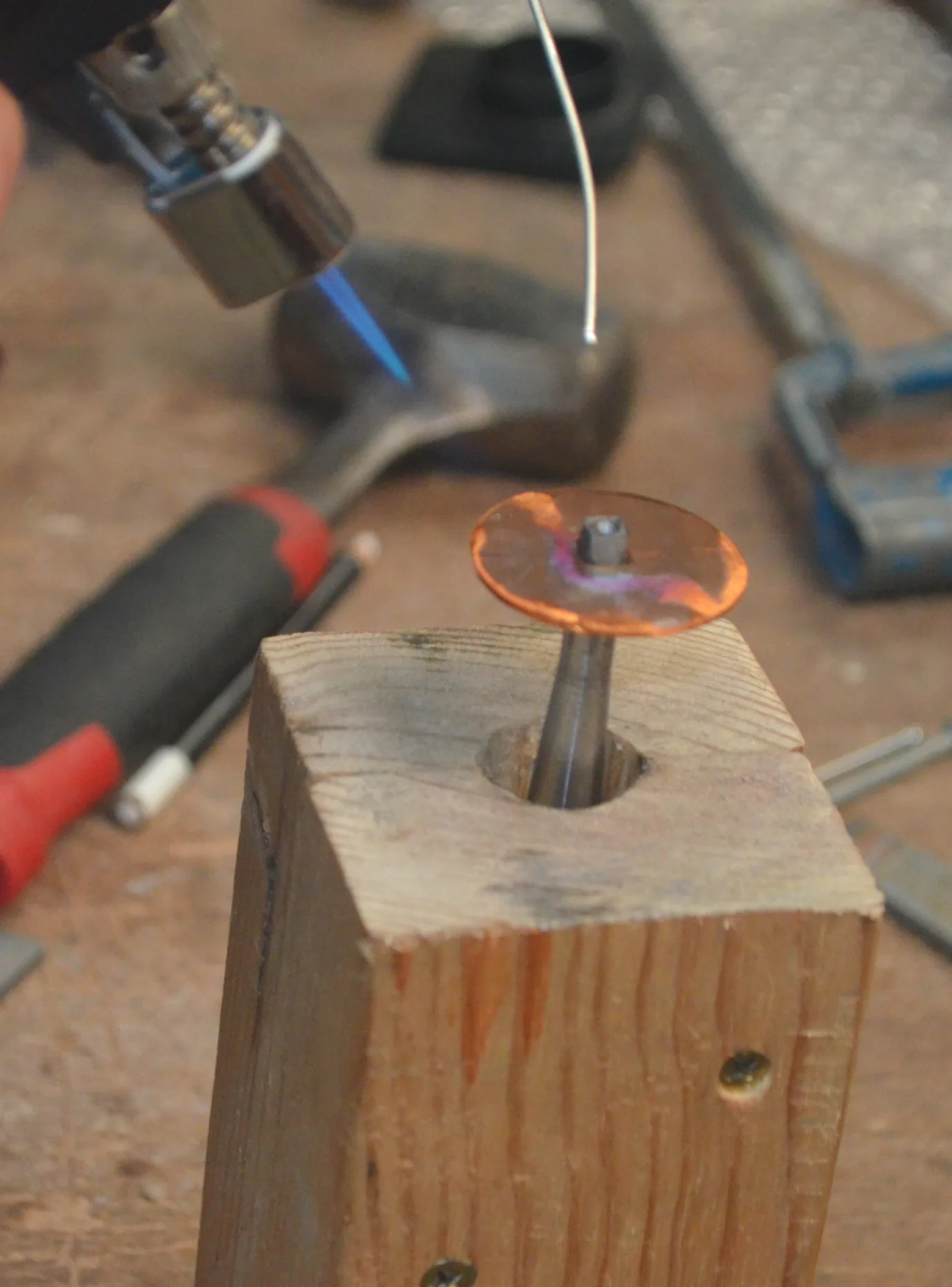
After years of diamonds, copper with even a coarse grit was a disappointment, and lead crystal, which is much softer to engrave, he cannot lay his hands on.
Using hard glass, I need diamonds to start any cut or the copper wheels will slide around showing the beginner I am. However I have carved deeply then smoothed with diamonds before using copper wheels to finish off with that silky smooth finish it is famous for.
Peter CummingsA few extra leaves
The blanks are what he can get.
I have used float glass shelving, my own coloured fusing pieces, specialty hand blown, and commercial domestic glass. These are not as smooth to finish and control detail which means a few extra leaves to disguise slips.
Peter CummingsWith glass blowers he has made graal, where the engraved blank is blown out afterwards and the image stretches with it; Mongol Riders of the BMX Clan, from 2018, was blown by Philip Stokes. From flat glass carved through a coloured back he has also printed: in 2023, relief prints on Hosho paper from two plates of six-millimetre float glass engraved on the wheel. It was partly to raise local interest in glass, and it did not.
Man the maker
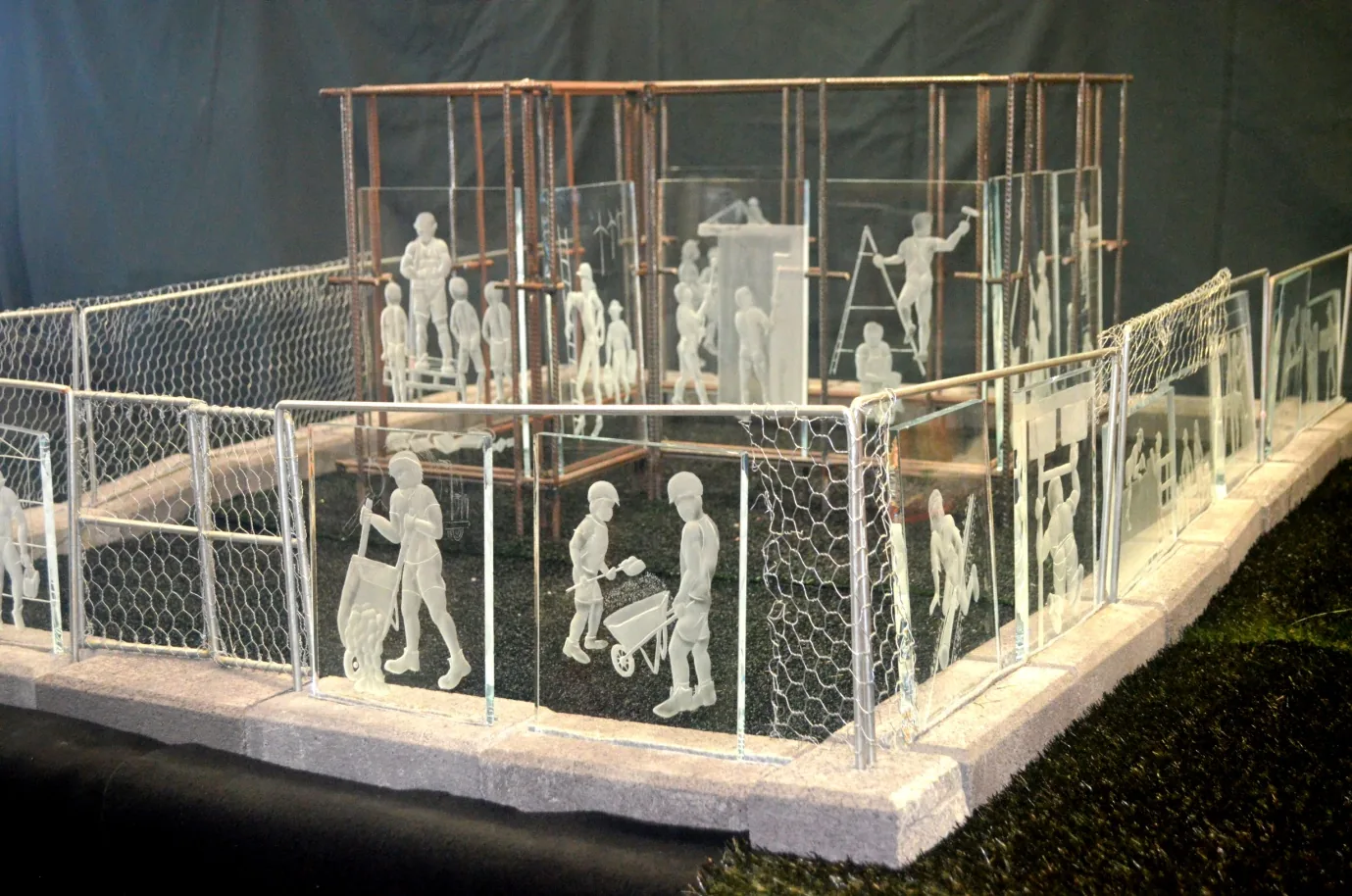
The subjects are working people. A building site, in clear engraved panels set within a frame of metal rod and wire mesh, carries labourers with wheelbarrows, a man up a ladder and figures on the scaffolding. Man the Maker is an idea he has been turning over, he writes on his blog, since reading Richard Sennett’s The Craftsman, and what he wants in the glass is their personality, strength and dignity, and the fact that they build the world the rest of us live in.
He quotes Glenn Adamson, from The Invention of Craft: this does not require “a spirit of revival or preservation, as if stasis were the best we could hope for”.
While the process using copper wheels needs preservation, I believe the art form of intaglio and relief engraving of glass has important prospects for the future.
Peter CummingsThe cabochon with the flower in its back is still on the desk.