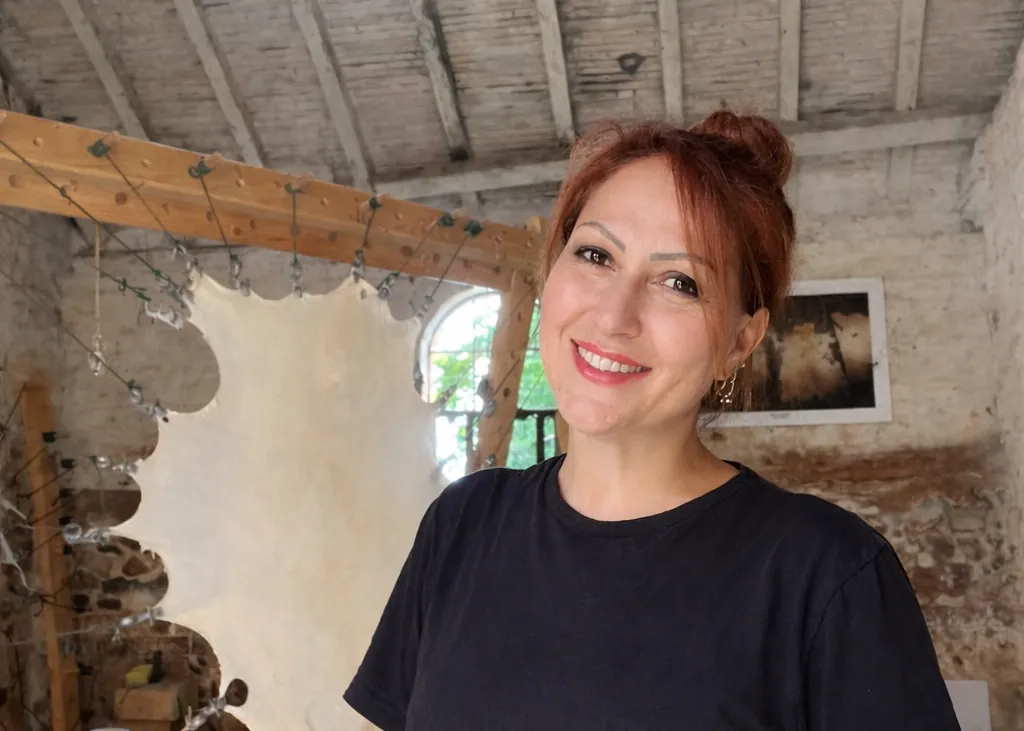
In July 2017, in the covered Ottoman bazaar at Bergama, a guild ceremony was held that the town had not seen since 1910. An old man tied a workman’s apron around the waist of a woman he had refused, for three years, to teach.
The man was İsmail Araç, the last karatabak in Anatolia: the last man alive who worked skins the old way, by hand, with nothing industrial in it. The woman was Demet Tokbay. Parchment takes its name from that town. Araç was in his eighties and had never trained a successor.
Tokbay makes parchment in Norfolk now. She brought the craft with her, and in the English weather it stopped working.
The invention of people who had run out of paper
Around 190 BC the library at Pergamon was competing with the library at Alexandria for the number of volumes on its shelves. Egypt, which controlled the papyrus, stopped selling it to the rival. Parchment is what a city invents when it has been cut off from paper.
What the town produced instead was a skin scraped so thin it could be written on both sides, and would not tear, and did not burn easily, and could be folded without cracking. That last property mattered more than the rest. A papyrus roll has to be unrolled; a folded skin can be stitched into a spine and turned page by page. The codex — the object we still mean when we say the word book — took hold with parchment. The Codex Sinaiticus, made in the fourth century, is in the British Library, and its pages still turn.
The point of the material was permanence. It was made so that writing would outlast the people who did the writing.
Recipes for making it have been written down for centuries. The part that decides whether it works has not.
There is no number
A skin goes into a bath of lime and water, which loosens the hair and breaks down the fat. Leave it too short and the hair will not come away. Leave it too long and the surface is damaged past saving. Everything afterwards — the scraping, the stretching, the drying, whether the sheet takes ink or repels it — depends on getting out of the lime at the right moment.
There is no right moment that can be stated as a number of days.
I was trying to find the mathematics of the process. I wanted to establish a fixed amount of time and repeat it, believing that I could create a method that would work for every skin. Eventually, I discovered that it simply does not work that way. My master was right.
Demet TokbayWhat he had told her, for years, was that she would understand it with time. She calls what she learned instead the language of the skin. The season changes it; so does the species, and the age of the animal, and a dozen conditions nobody writes on a label. She reads it now in the colour of the skin as it lifts, and in a small pressure test she makes with a finger.
The other thing that ruins a sheet cannot be seen at all. If the lime is not washed completely out, the surface will fight the ink years later, and the parchment will eventually destroy itself from the inside.
The man with no apprentice
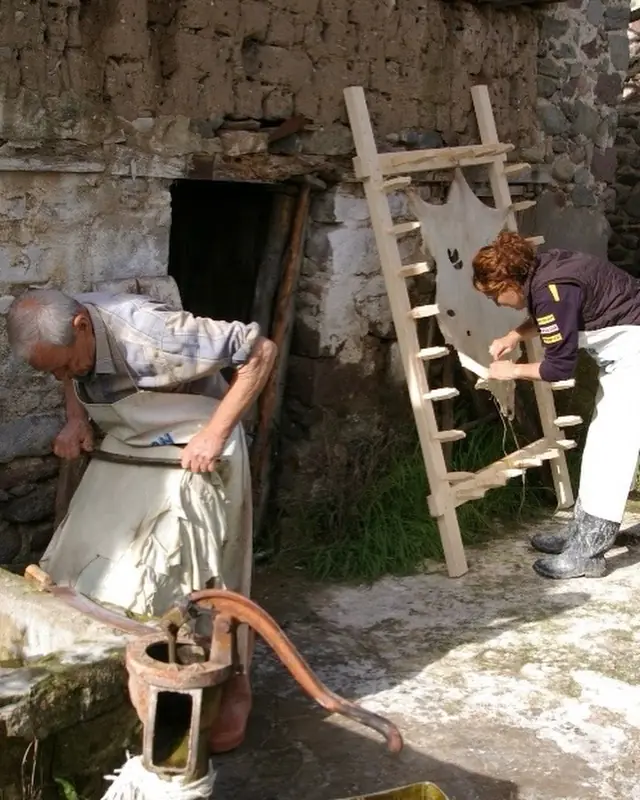
Araç went under the Tanners’ Bridge in Bergama as an apprentice in 1955 and was a tanner for the rest of his life. He never gave the trade up; parchment was something that arrived in the middle of it.
In 2005 the Bergama Culture and Art Foundation (BERKSAV), chaired at the time by Macit Gönlügür, set out to have parchment made in the town again. The first step was not a craftsman at all. It was a leather company in Istanbul, Kare Deri, producing parchment by more mechanised methods. Looking for the traditional article, the foundation went to Araç, one of the last traditional tanners still working in Bergama, who at that point was making leather rather than parchment.
The work is not gentle. It took him about an hour to scrape the hair off a single sheepskin, and up to a month to finish one sheet. Lime is hard on hands and he never wore gloves. The nails he used to stretch skins on the board were as old as he was. Apprentices had come to him before and left within weeks, which is the ordinary fate of a craft that pays badly and hurts.
That he was the last was not one person’s discovery; it was something understood among the people working around the craft, out of their own work and research. Nesrin Ermiş worked for Bergama municipality, and from 2012 in its world heritage unit, where her job was to record the town’s intangible heritage: to list the things Bergama had that could not be photographed. Parchment was one of the entries, and there was one man behind it. She and her friend Demet Tokbay went to him.
By Tokbay’s account it took about three years of asking before he agreed. He did not believe a woman could do the work; he set the two of them small tests of endurance, to see whether they would stay. When he was satisfied, he taught them everything he knew and held nothing back. A documentary made in 2014, Çırak — The Apprentice — is about exactly this: an old man with no successor, young men who give up, and a woman who will not go away.
What followed was not a handing down, and Tokbay is firm about that. She had read about parchment and had the theory of it; he had spent half a century with his hands in lime. She gave him what she had read and he gave her what he could do, and between them the thing was put back together.
In 2006 the foundation opened the only parchment shop in Bergama. What began as a foundation project outgrew it: first a business called Pergamon Parchment, then Mavi Dükkan, which Tokbay set up herself, and later others.
Written down from the outside
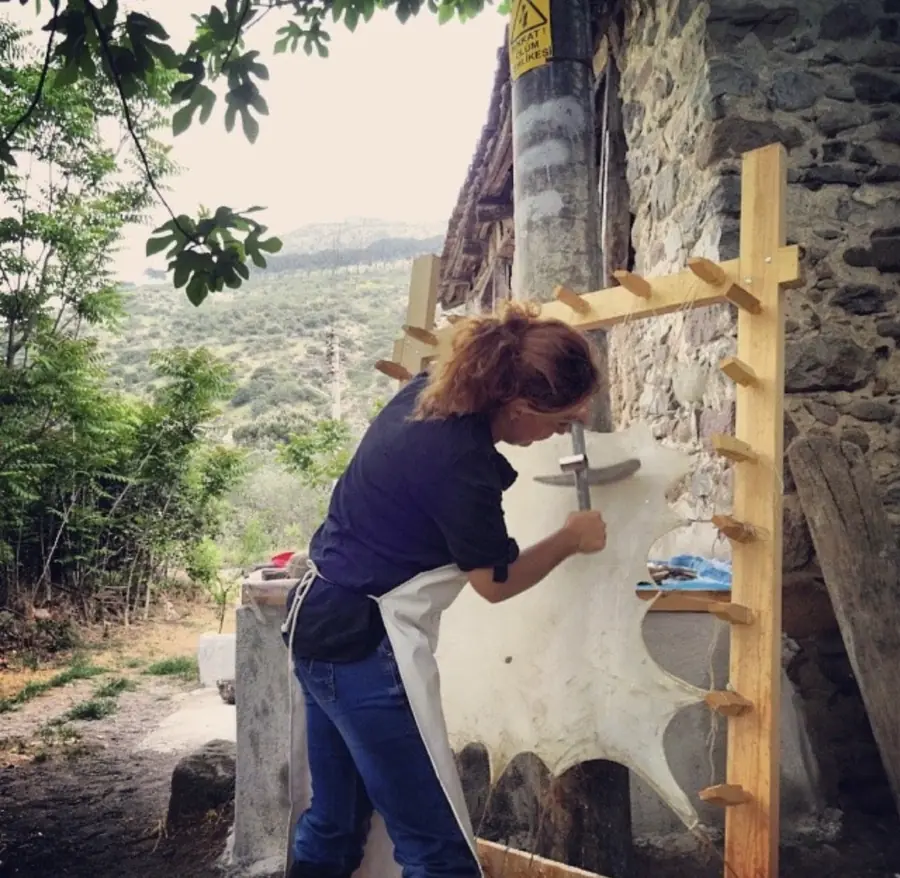
Having learned a craft that could not be recorded, the two of them set about recording it by other means. From 2013 they filed applications. In 2016 Tokbay said publicly that the ministry showed no real interest in parchment and that they had not managed to get it accepted, through official channels, as something Turkey had and was losing.
In 2020 the ministry recognised traditional parchment making as a craft discipline in its own right. In 2021 İsmail Araç was named a Living Human Treasure. The head of Bergama’s world heritage unit put it plainly at the time: after the first moves by her own office, Tokbay and Ermiş took the thing on personally and worked at it harder than the institutions did.
The apron ceremony belongs to the same effort. The Peştemal Kuşatma is an Ahi guild rite in which a master publicly ties an apron on an apprentice, and with it hands over the right to keep a workshop and train others. The last one recorded in Bergama, in the books of the local historian Osman Bayatlı, was in 1910. In 2017 it was performed again, in the same bazaar, for Tokbay, who was made a master, and for Ermiş, who was made a journeyman and became a master three years later.
When she brought him her own parchment to look at, he used a Turkish proverb about the horn overtaking the ear: the pupil has passed the teacher.
Then it stopped working
She moved to England in 2019, and the method she had spent a decade acquiring began to fail in ways she had not anticipated.
I only truly realised how important geography is to the chemistry of parchment making after I brought my practice to England. It is not simply the climate that changes; the characteristics of the animals are different too. Differences in temperature and humidity affect the nature of the skin, its balance of oils, and ultimately the whole process of making parchment.
Demet Tokbay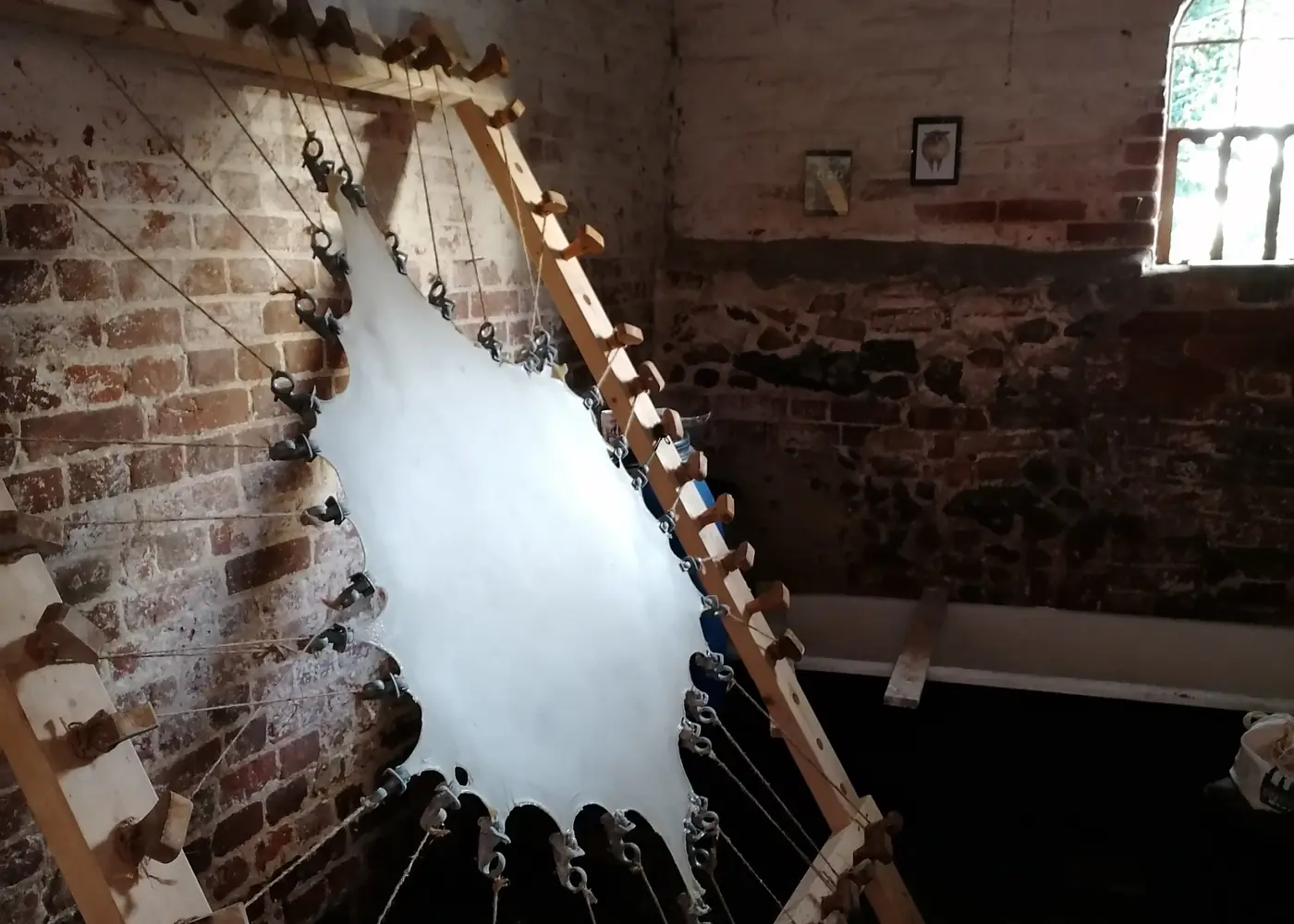
A skin that dried in a single day in a Turkish summer takes two or three in Norfolk. The lime timings had to be recalculated to match. Winter in Bergama was a good season to work; winter in England is mostly a loss. And the raw material turned out to be harder to obtain in a county full of livestock than it had been in Turkey, because the movement of animal by-products is tightly regulated — sensibly, she thinks, on public health grounds, though it is a strange difficulty for a craft that only ever wanted something the meat trade was throwing away.
In a sense, when I began making parchment in a new country, I did not simply bring my method with me; I had to learn it again in conversation with a new environment.
Demet TokbayWhat a skin remembers
Tokbay is a conservator as well as a maker, which is an unusual pair of things to be.
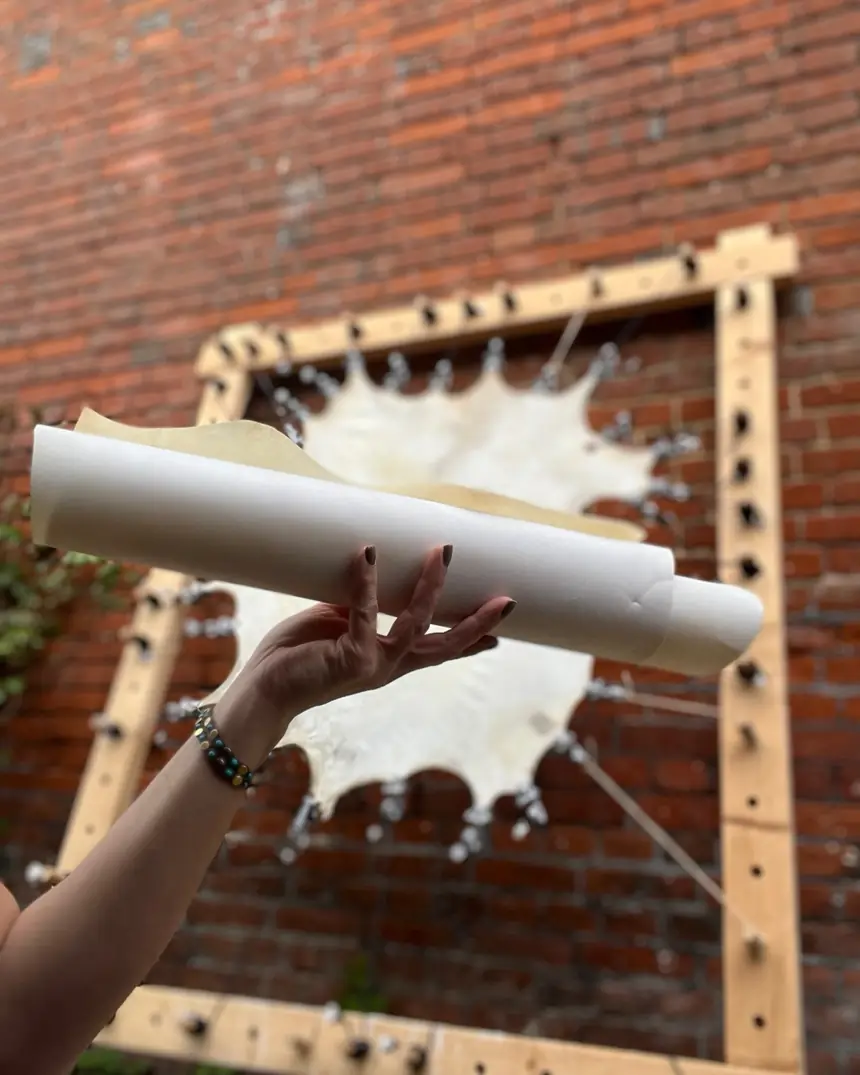
Looking at an old sheet, she can tell a mark left by the maker from a mark left by use, and both from the marks of age or of later damage, because she has put a skin through every one of those stages herself. Small cuts and holes do not distress her; some of them were made when the animal was skinned, before any craftsman touched it.
When parchment was expensive a text was scraped off so the surface could carry another one, and when a sheet was past writing on it went into a binding to strengthen a spine. A flaw never made a skin worthless.
Fish, fruit, vegetables
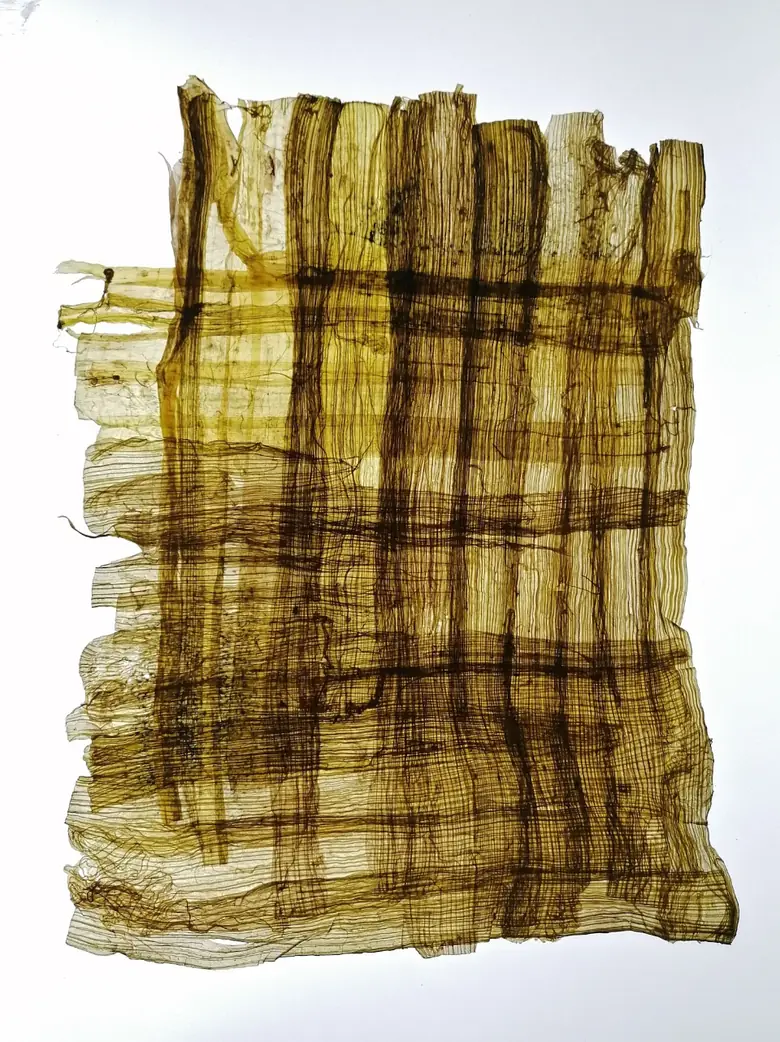
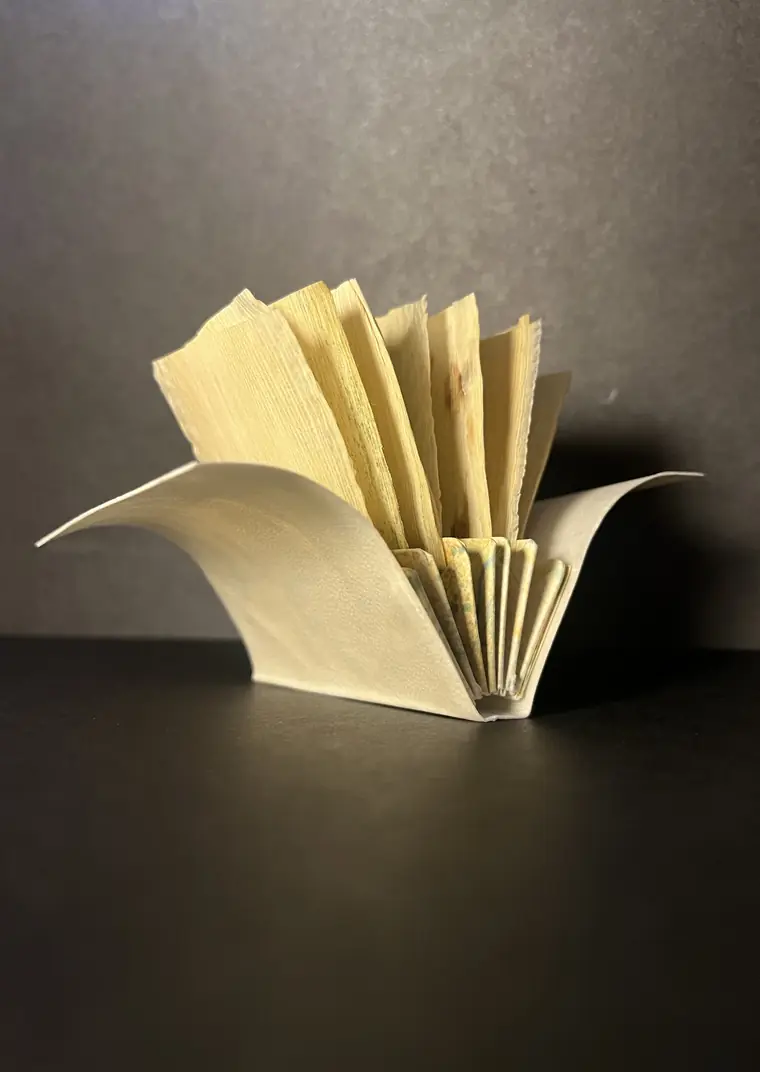
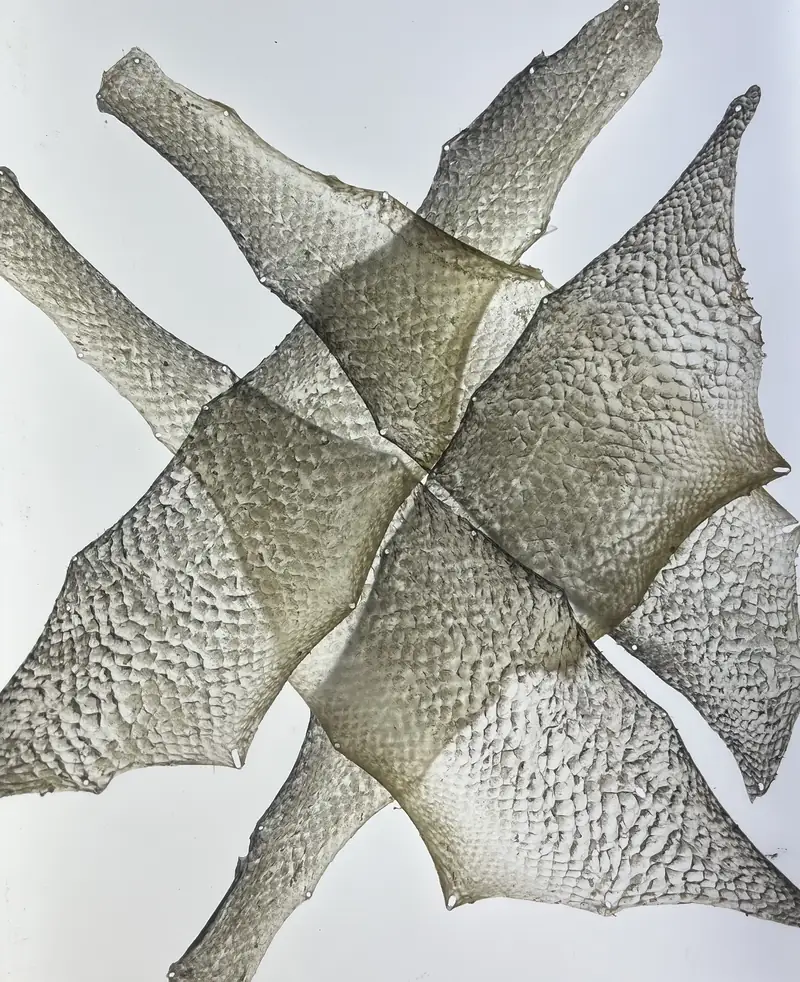
When the studios closed in 2020 and skins could not be had at all, she made parchment out of fish skin, and sheets like papyrus out of fruit and vegetables. It started as a way of not stopping. Each material behaved differently and taught her something, and she began putting them together with real parchment in books and objects, which is now part of the work rather than a substitute for it.
One link
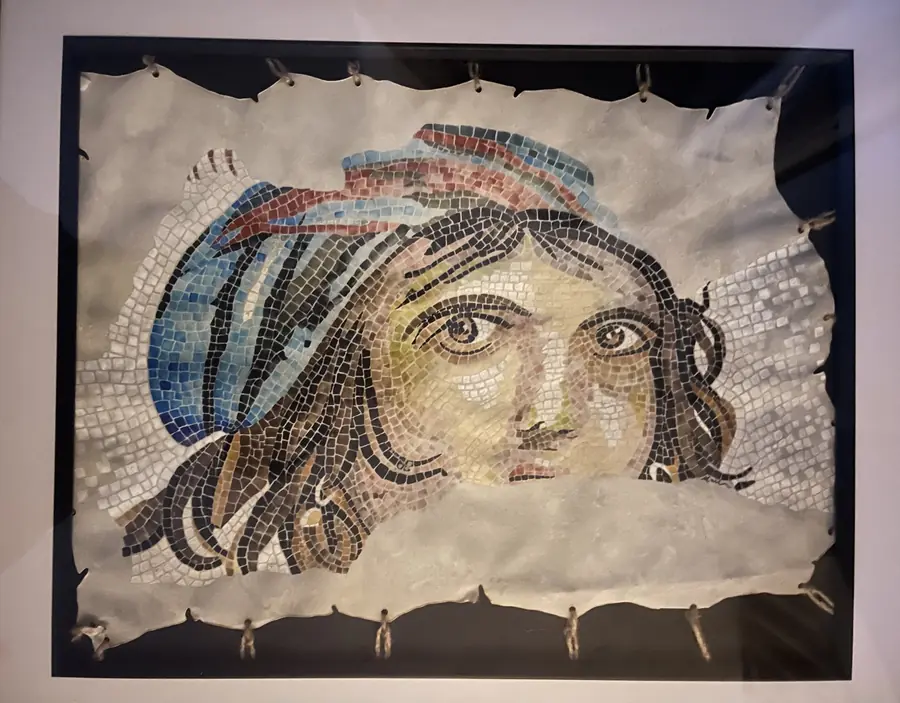
İsmail Araç died on 28 May 2026, aged ninety-three. Bergama is collecting signatures to turn a restored tannery into a parchment museum in his name. His apprentices repeat a line of his: the parchment he made was not what he left behind, they were.
There are more of them than the obituaries suggest — Ermiş in her grandfather’s back garden in Bergama, Meltem Demirel and her husband running the parchment shop in the town, Hazel Aymaz, who came to the craft while she was being treated for cancer and now teaches it, and Harika Geldi. In Turgutlu, in Manisa, Rıza Dam came across Tokbay’s posts about parchment, began making it himself, and has made a good deal of it since. Tokbay is the one who took it out of the country.
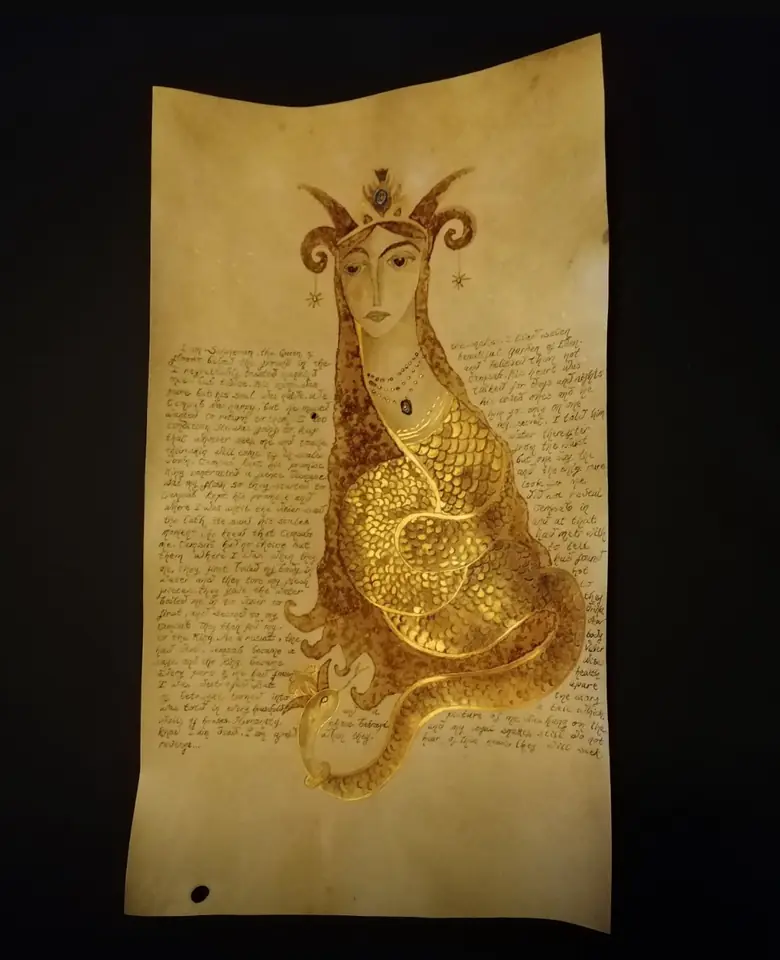
In Britain the craft is on the Red List as critically endangered. There is one firm making parchment and vellum, William Cowley at Newport Pagnell, with two skilled masters and one apprentice. Tokbay works outside that, alone, in Norfolk, teaching workshops and starting a master’s degree this month, and writing a book about the technique with her own drawings in it.
I may have received the title of master, but the excitement of being an apprentice and my desire to continue learning have never left me.
Demet TokbayThe most durable surface anybody ever invented for writing on was made to save knowledge from the death of the people who held it. The sheets have lasted two thousand years. The judgement that makes them has never been reducible to anything you could write on one. In the town that gave parchment its name it had to be assembled again out of four things that had nothing to do with each other: a foundation’s project, a leather company’s machines, an old tanner’s hands, and a young woman who had read about it.