A glove size is one number. It is the measurement around the hand at the knuckles, and it is all the trade asks before it sells you a pair.
Two people might have exactly the same glove size, yet one has short fingers and the other long ones. A standard-sized glove might not fit either of them particularly well.
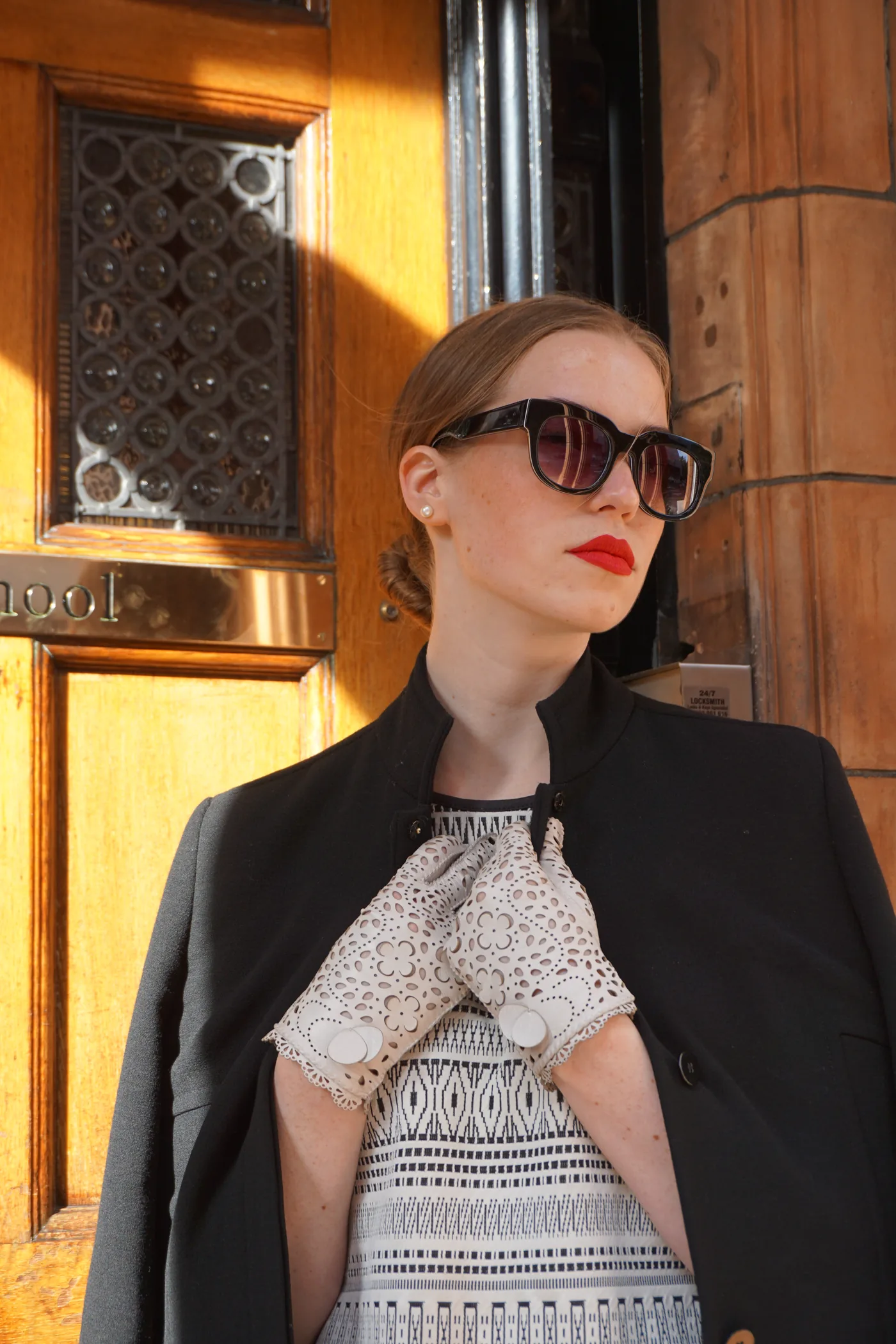
Riina ÕunRiina Õun has been measuring hands for more than twenty years. She trained in leather accessories design and making at the Estonian Academy of Arts and went on to London, where she interned with Una Burke and made commissioned gloves for Giles Deacon. In 2013 she launched her own label, Riina O — a name she chose because nobody in London could properly spell her surname, Õun (pronounced like “own”). The gloves are cut and stitched by hand to a fitting sample.
What a hand does to a material
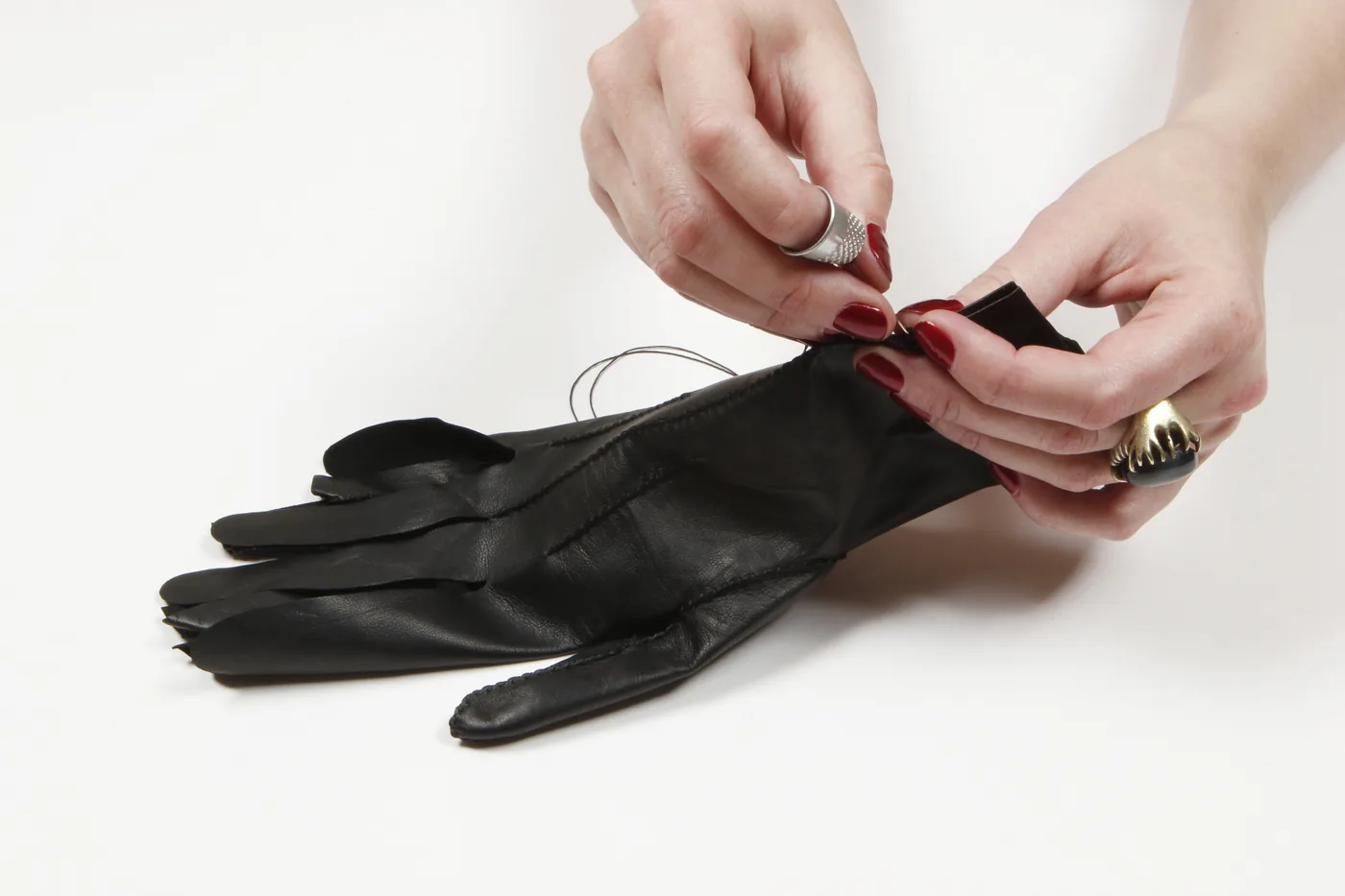
A hand bends at fourteen finger joints, warms whatever touches it and sweats into it, and when it closes it pulls the covering in every direction at once. Glove leather is chosen and prepared for that. Before the pattern goes on, the skin is dampened and pulled so that its give runs around the hand and not along the fingers; cut the wrong way, a glove grows longer and narrower every time it is dragged on. The finished pair is stretched again on a form. Numerous intricate hand stitches hold the parts of the glove together. She has taught all of this in masterclasses for nearly ten years, two long days at a time.
What can’t really be taught in eighteen hours is the sensitivity that comes with experience: understanding how leather behaves, how a pattern needs to respond to the shape of a hand, or how to achieve beautifully consistent stitching.
Riina ÕunNejc Urankar, who coats photographic plates, described that knowledge here last month: the hand changes what it is doing before the problem has been put into words.
Leather does all this because it was a skin already, with a fibre structure braided in three dimensions that stretches and recovers whichever way it is pulled. Very little else does. The problem Õun set herself about nine years ago came from her vegan clients, who wanted gloves without leather, and from the alternative on the market, which was, as she told an Estonian newspaper in 2020, PVC and polyurethane under another name.
The brewery’s leftovers
The answer came in the summer before she began her MA in Material Futures at Central Saint Martins. On holiday on Saaremaa, an Estonian island, she came across a video about growing a kombucha culture and using it as a leather alternative. She had seen it before and wanted to try it, but had never found the time. One morning over breakfast the video turned up again, and she realised she finally had the time and space to experiment. She ordered a culture, and it arrived at a parcel locker from the other side of Estonia.
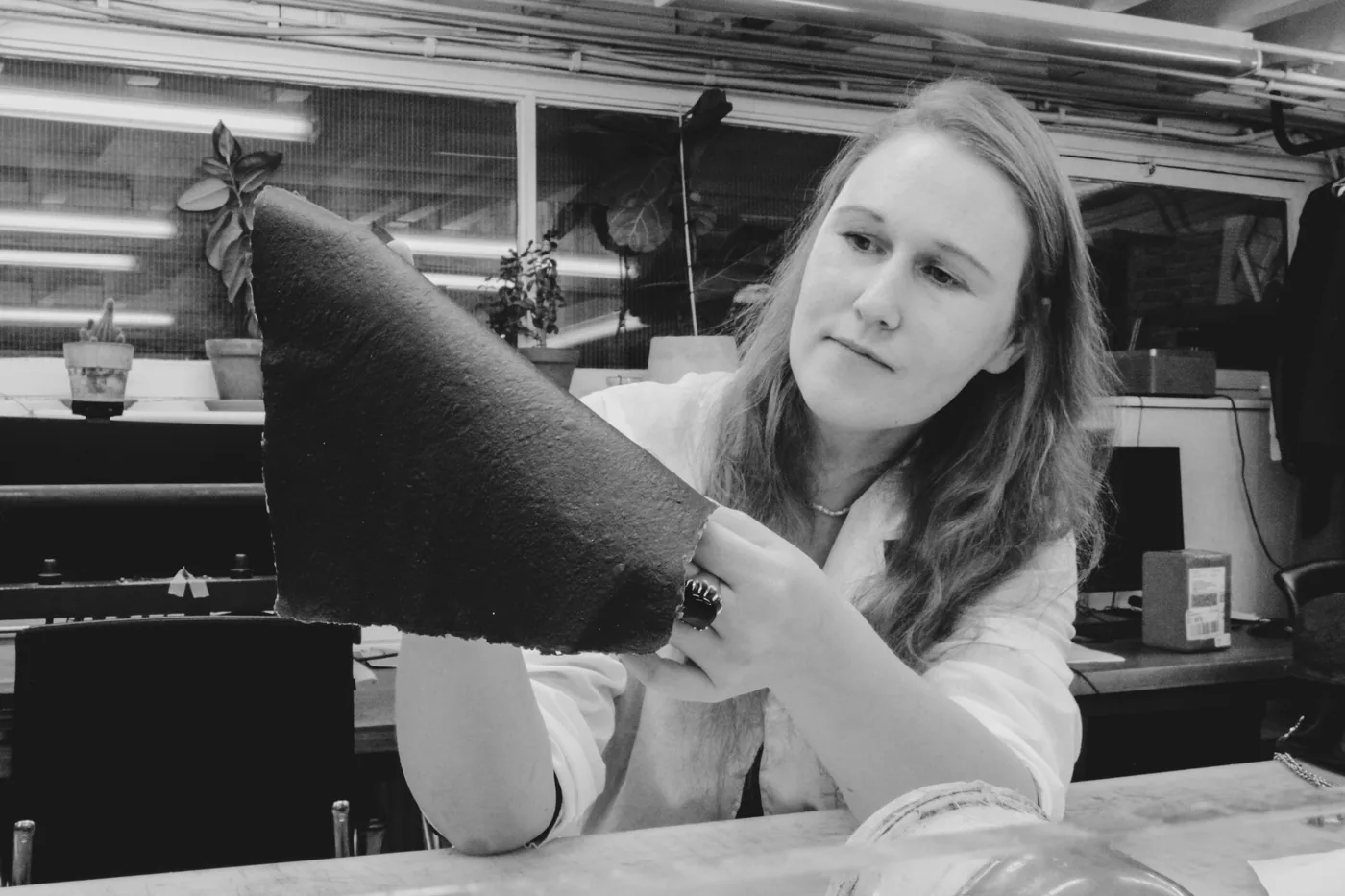
Brewing kombucha leaves a pellicle of bacterial cellulose on the surface of the tea, a rubbery disc that breweries often end up composting. In 2019, on a residency at Green Lab in London, she began by growing the SCOBY, the symbiotic colony of bacteria and yeast, herself, but soon switched to the breweries’ leftovers and developed her own recipe. The SCOBY is broken apart and put back together as a composite material, with only natural additives to enhance its different qualities, and the sheets come out more uniform.
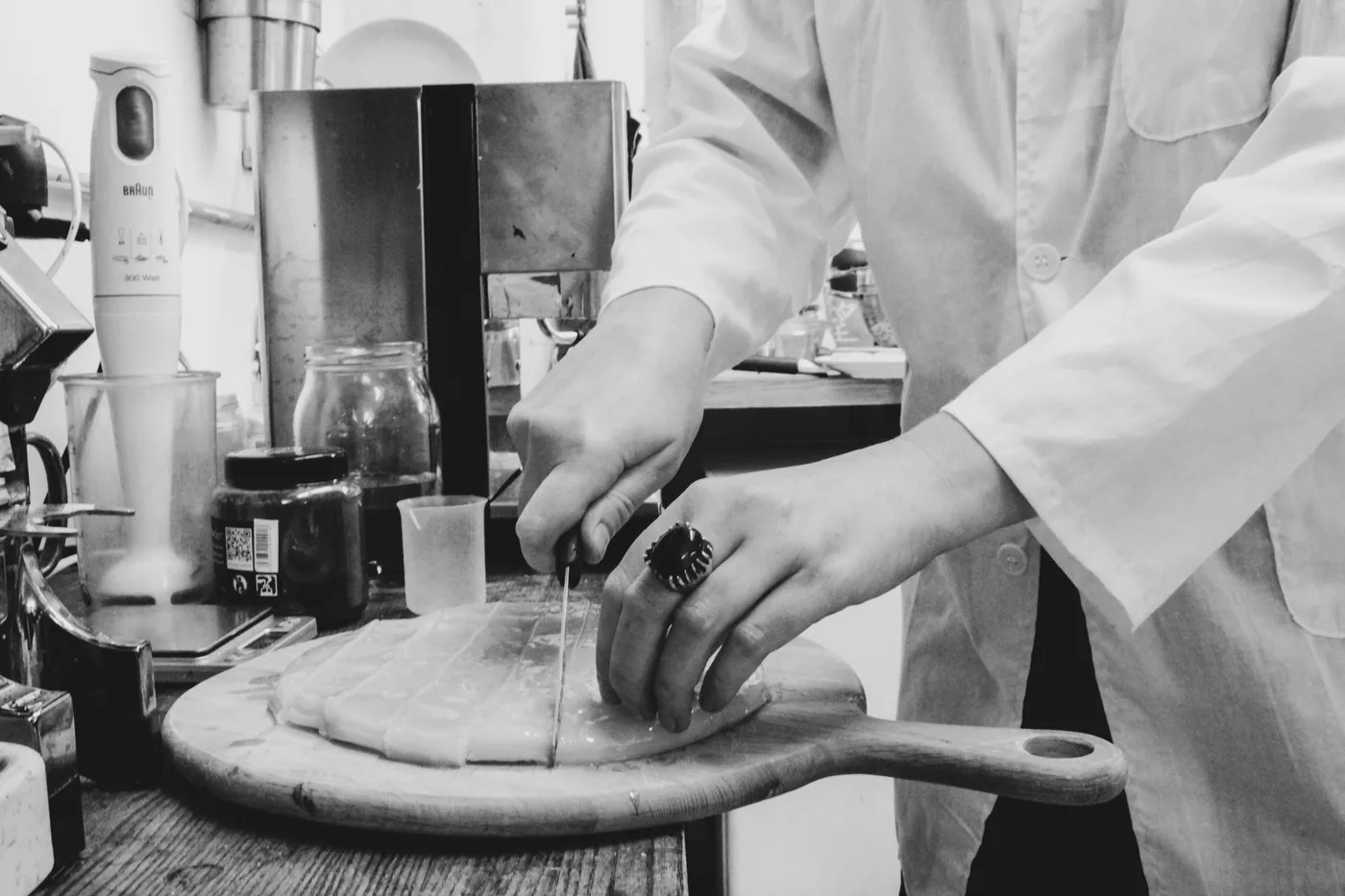
A laser, which burns leather dark, turned this material white. Shellac made it water-resistant. She called it SCOBY-compo, and the first things she made from it were coasters and a glove.
The material depends on other people’s tea. If a brewery closed, she says, she would look for another nearby, and if its SCOBY turned out different she would adapt her method.
Working with biological materials means accepting a certain degree of variability rather than expecting every batch to be identical.
Riina ÕunDemet Tokbay, in this magazine in September, found it with skin too: parchment learned in Bergama stopped behaving in Norfolk and had to be learned again.
The glove
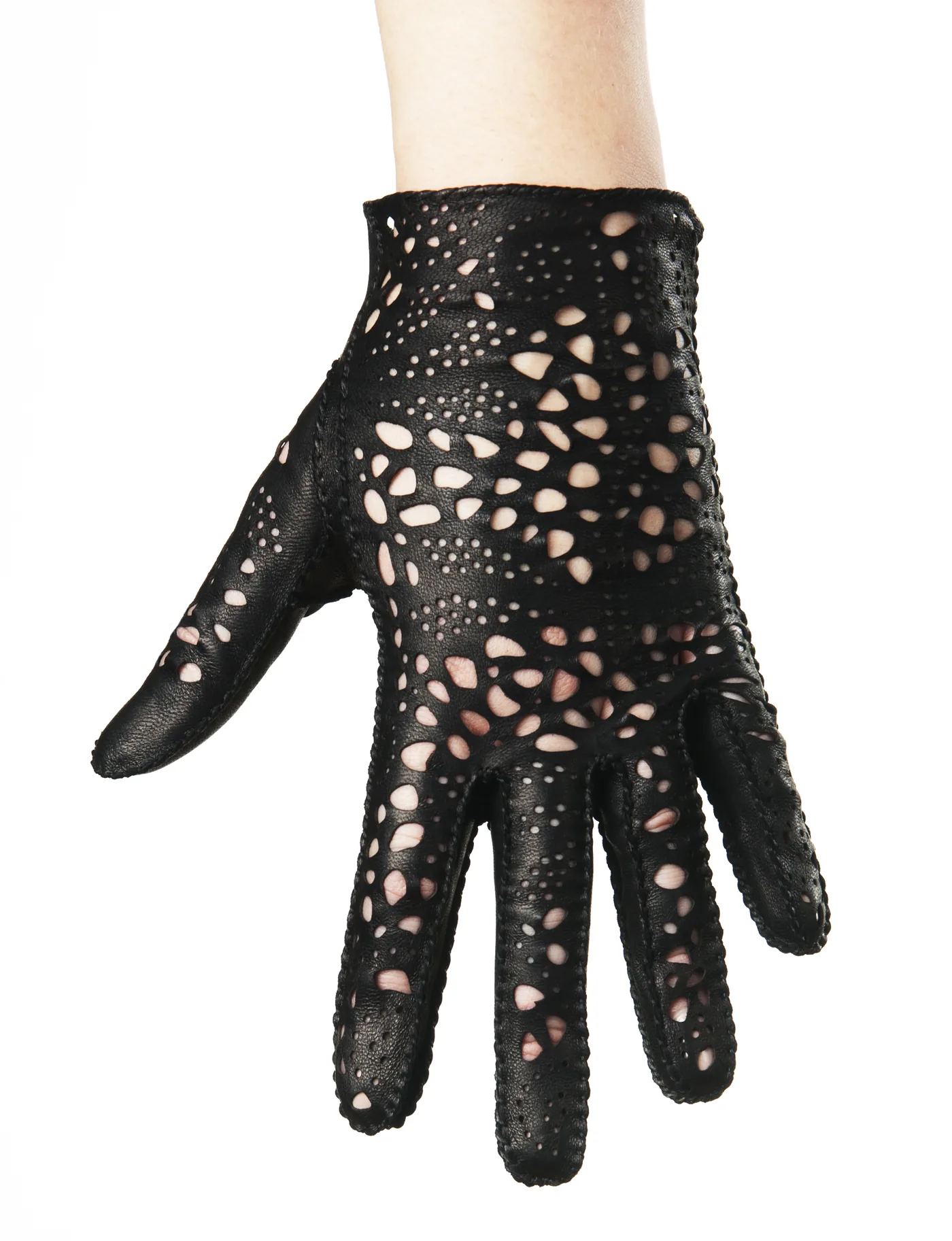
It is called Aura. It is black, etched on the back with a pale pattern where the laser touched it, and it has been exhibited, photographed and written about since 2019. It is currently a concept piece and a work in progress.
The SCOBY-compo material is suitable for both machine- and hand-stitching, but it still lacks some of the stretch needed to fit comfortably on the hand.
Riina Õun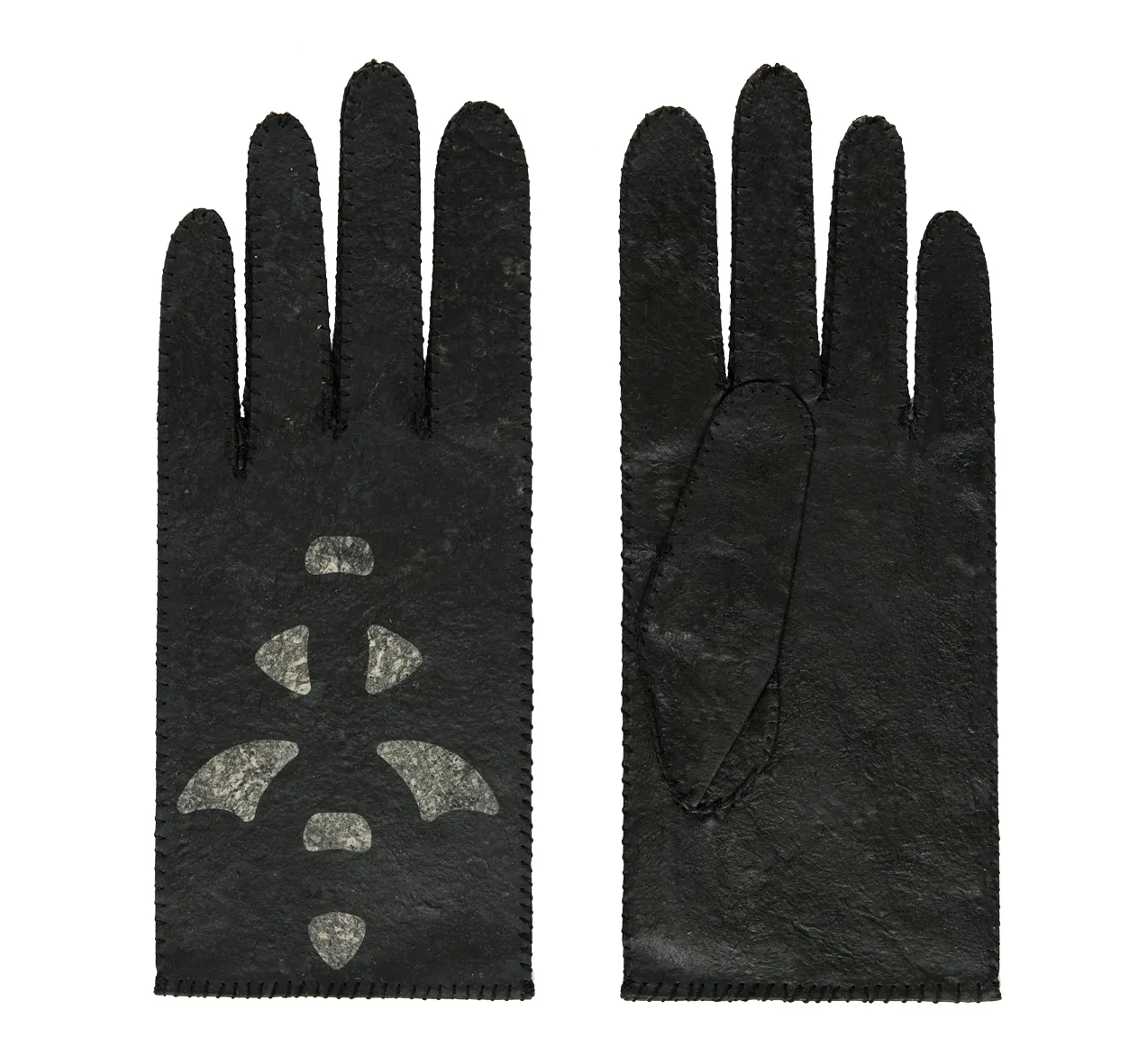
Independent tests point the same way. In 2023 a group at Manchester Metropolitan University put bacterial cellulose grown from kombucha through the standard tests used for clothing and published the results in the Textile Research Journal. Under tension it was weaker than animal skin. It was the least breathable and the most moisture-retentive of every fabric they tried. A glove is tested on all three whenever it is worn. On abrasion the material was excellent, and the authors suggested it might serve as protective patches on garments that scuff. Her own tests, at SATRA in the UK and at TalTech in Estonia, she describes as encouraging, with the work ongoing.
For now, she says, the material is better suited to accessories such as handbags. It has also gone into a corset with laser-cut panels for the label Felder Felder in 2023.
Made to return
Her gloves are leather, which she points out is also a by-product of the food industry, and, looked after, they last for decades.
Over time, they adapt to the shape of the wearer’s hands, becoming increasingly personal. In the Middle Ages, gloves were even used to symbolically represent their owners in their absence.
Riina Õun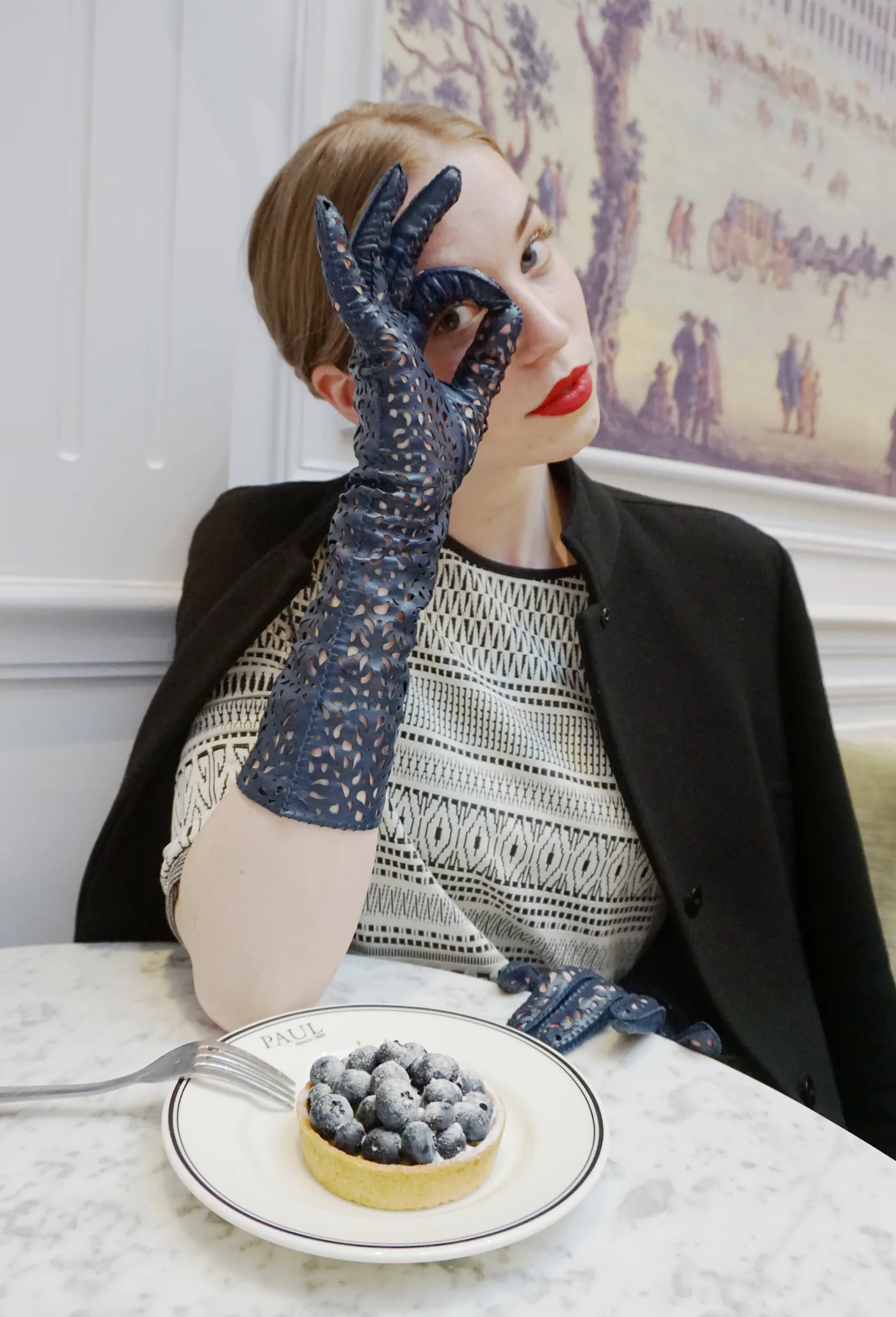
What she makes from SCOBY-compo is made for a shorter life. The Floras bags have dried flowers set into the sheet, wine-red to translucent tan, and are scented with essential oils. They are meant to be worn, kept and eventually returned to the earth; her figure is ninety per cent biodegraded in soil within sixty days. Her garden gnomes, of eggshell composite, are made to dissolve.
I don’t see biodegradability as an invitation to consume and discard. For me, it is about creating with the full life cycle of a material in mind, including its return to nature. I find beauty in materials that can become part of the natural cycle again.
Riina Õun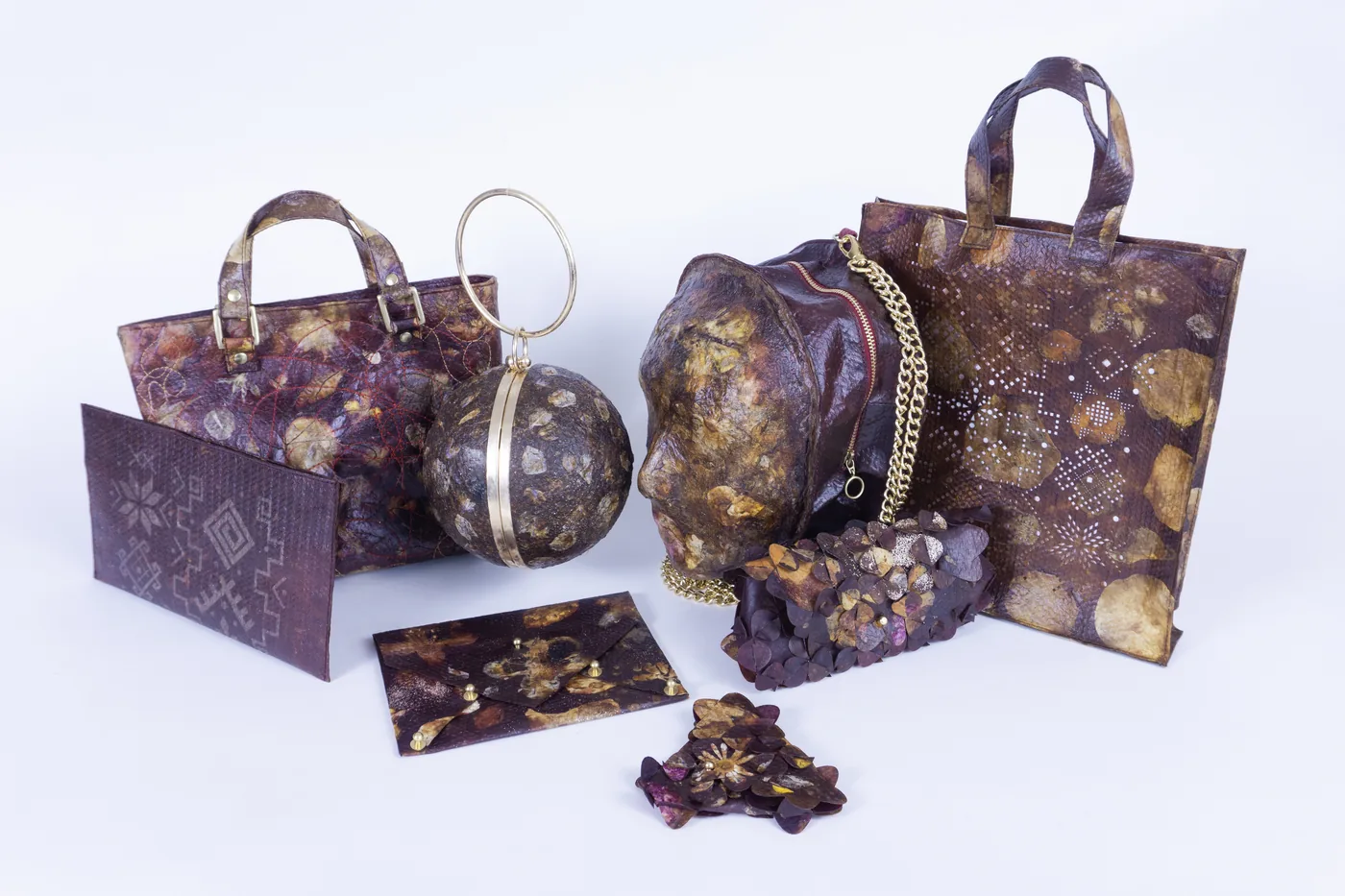
On Saaremaa she built a horn of plenty called Cornuscopia, of timber, plant-fibre rope and Estonian sauna whisks, with seventy-three contributors. It opened in the village of Piila on 4 August 2024 and was meant to stand until the next Midsummer and then be given back to the ground. It is still standing, and nature has started taking it over. It faces the forest: an invitation, she says, to the wild creatures of the village and the woods around it to come in and use it as they like.
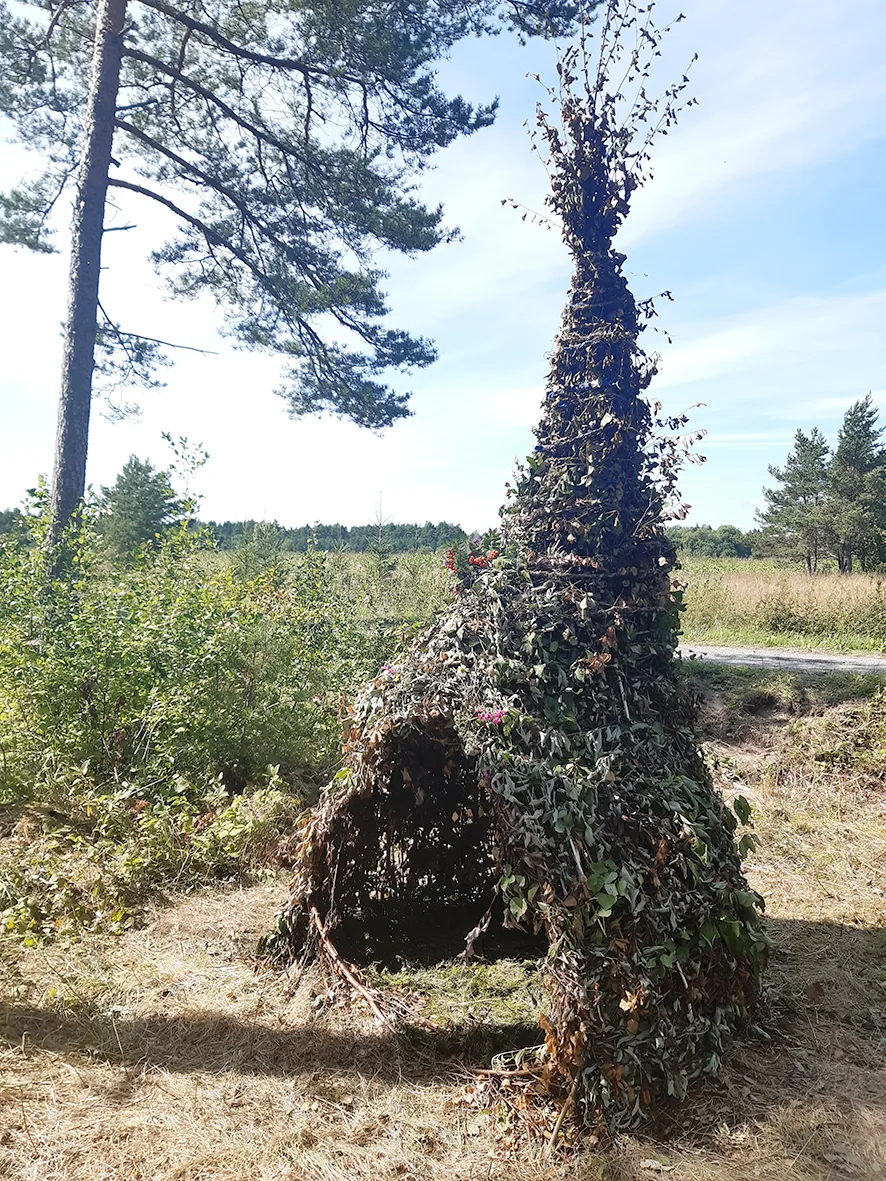
Perhaps true beauty doesn’t always lie in permanence, but in appreciating something precisely because it won’t last forever.
Riina ÕunEighteen fingers
Over the years, I’ve explored everything from laser cutting to unconventional patterns, including a pair of gloves with 18 fingers in total and a long fingerless pair decorated with around 250 decorative fingers!
Riina Õun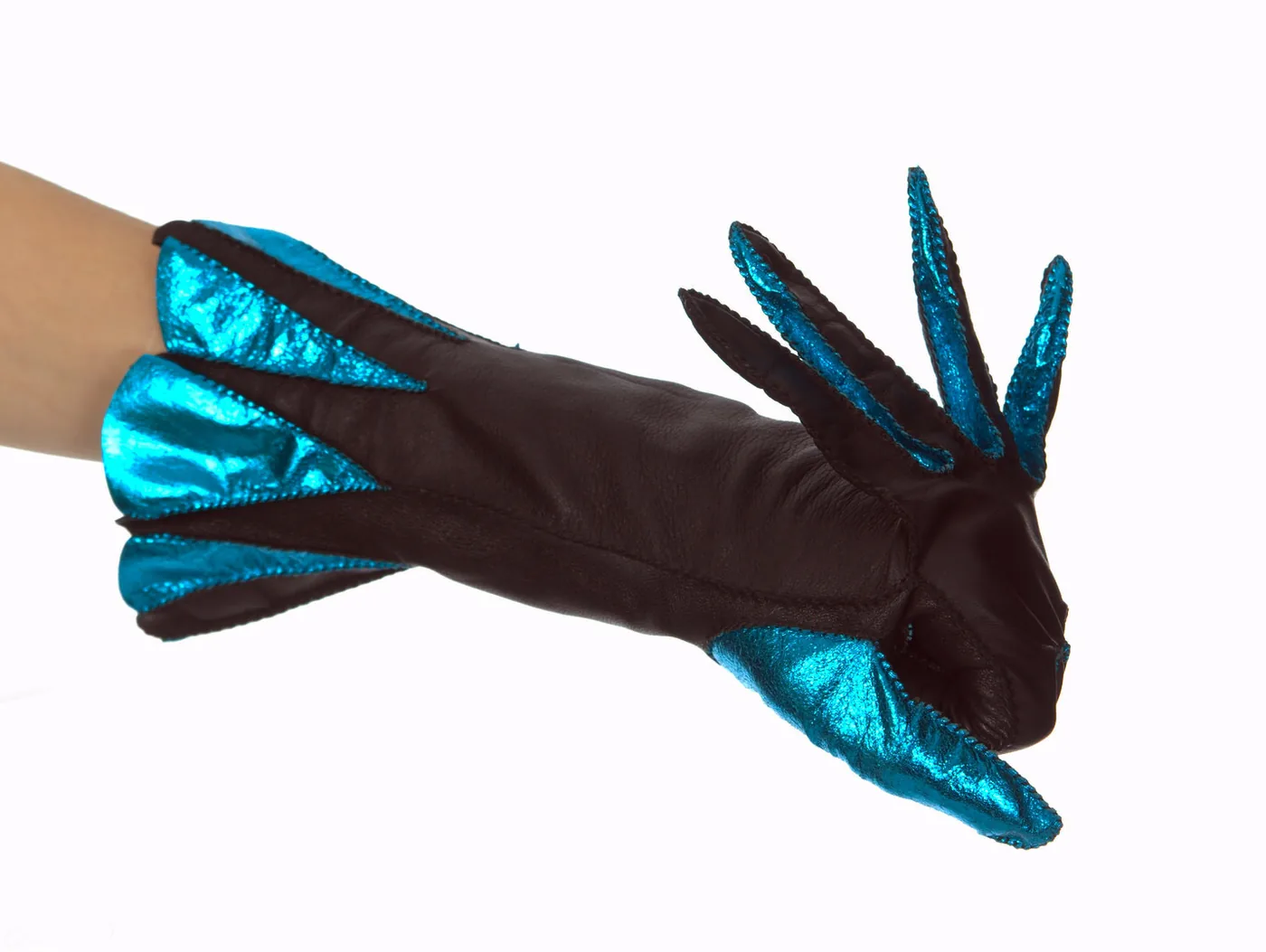
The materials were the other experiment. SCOBY-compo was not her first attempt to put something other than traditional leather on a hand. Before it came fish skin, chrome-tanned, from Estonia and Iceland, which she used in a collection.
What surprised me was how hesitant some luxury consumers were about using fish skin in accessories over a decade ago, before the innovative materials movement really took off. I was even advised to market it as “responsibly sourced exotic skin” instead!
Riina ÕunTwo models in the boutique still carry the detailing, and the listing today carries both the phrase she was advised to use and, in brackets, the fish: Icelandic salmon. She has recently gone back to fish skin, this time as a materials researcher rather than a designer.
I’m exploring natural and regenerative tanning methods, with the aim of developing the material myself before turning the results into design pieces.
Riina ÕunWhen people complain to her about how their hands look, she wishes they would appreciate them more.
Having also worked on hand prosthetic projects, I’ve come to appreciate just how extraordinary our hands really are. Sometimes I want to tell people: stop worrying about how your hands look and appreciate everything you can do with them!
Riina Õun